
NORTHERN KENTUCKY · GREATER CINCINNATI
Commercial Air Barriers
Resolve the details before the exterior closes in.
Professional Sealants, Inc. installs commercial air barriers for projects in Northern Kentucky, Greater Cincinnati and nearby Indiana. Our work covers exterior assemblies, transitions, interfaces and building-envelope openings. Define the scope while those details are still accessible.
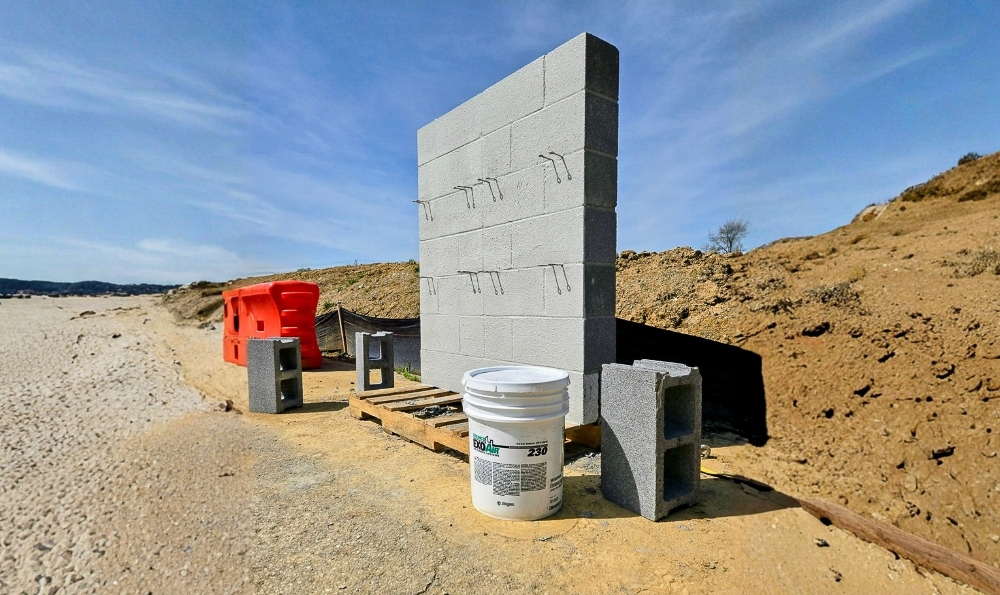
Air barrier wall sample · From PSI’s project photo library
Since 2000
Commercial specialty contractor
Fort Mitchell, KY
Northern Kentucky | Cincinnati | Indiana
Commercial focus
General contractors & building teams
Continuity comes before concealment.
An air barrier controls unintended air movement through the building enclosure. Its performance depends on connected assemblies, including the points where materials and trades meet.
A gap at a transition can leave a path for air leakage. Once cladding or adjacent finishes cover the work, a correction can require reopening finished areas and coordinating return visits. Define those connections before access becomes limited.
Air barrier scope, from wall areas to connections
Exterior assemblies
Identify the wall areas, substrates and specified air barrier system. Drawings and assembly details establish the installation scope.
Transitions & interfaces
Define where the air barrier connects to adjacent materials and assemblies. Show the connection details and identify trade responsibilities.
Openings & penetrations
Include window and door perimeters, service penetrations and other interruptions shown in the project documents. PSI does not perform glazing.
Plan the handoffs before the next trade.
Broad wall coverage is only part of the work. The specified assembly, compatible materials and installation conditions govern how its details connect.
- Confirm surface preparation and substrate conditions.
- Coordinate transitions, penetrations and terminations.
- Plan access, weather limits and curing requirements.
- Identify required inspections before covering the work.
Make the bid review more productive.
Use our 'Contact Us' Page to introduce the project and summarize the air barrier scope. Include a link to your plans when available, or ask how to provide the documents.
What to include
- Project name, city and your contact information
- Bid due date and anticipated installation schedule
- Plans, specifications, wall assemblies and connection details
- Approximate quantities and specified system, when available
- Site photos, access limits and adjacent-trade sequencing
Flag open design questions and any specified testing or certification requirements so PSI can determine project fit.
Based in Fort Mitchell.
Built around commercial work.
PSI serves Northern Kentucky, Greater Cincinnati and nearby Indiana. Commercial projects within approximately 250 miles of Fort Mitchell are considered based on scope and location.
For commercial, industrial, warehouse, education, healthcare and municipal projects, send the location and scope for review.
AIR BARRIER PROJECT QUESTIONS
Before you request a bid.
Is an air barrier the same as a vapor barrier?
No. Air barriers control air movement; vapor retarders control water-vapor diffusion through materials. One material may serve both functions only when its properties and assembly design support both.
Does an air barrier replace waterproofing?
Not automatically. Air control and liquid-water control are different functions. A product may perform both, but the specified assembly determines its role. Identify each scope separately.
When should we contact PSI?
During estimating and before exterior assemblies are closed in. Share the bid date, access requirements and planned sequence while the project team can still resolve scope boundaries.
What if the building already exists?
Send photos, the affected areas and available assembly information. PSI can review whether the requested work fits its air barrier scope. The first inquiry does not require a complete document package.
What should estimators confirm before pricing?
Confirm the specified system, water exposure, substrates, joints, penetrations, quantities, access and installation schedule. If the system has not been selected, send available drawings and identify unresolved requirements. Final system selection should follow the project design documents and manufacturer guidance.
Related scopes need clear boundaries.
Joint sealants address joints and interfaces. Waterproofing and dampproofing address specified moisture exposure. Water repellents are surface treatments. None automatically replaces a continuous air barrier.
Get the air barrier scope on the bid list.
Send the project location, air barrier scope and bid date. Start the conversation before the next phase covers the details.